
Ever seen someone drop IDGAF in a chat and thought wow, that’s harsh?
Or maybe you’ve used it yourself without really thinking about how strong it sounds.
Here’s the truth: IDGAF isn’t just casual slang it carries attitude, emotion, and sometimes even a bit of rebellion.
And depending on how you use it, it can either make you sound confident or straight-up rude.
Let’s break it down in the simplest way possible 👇
🧠 What Does “IDGAF” Mean?
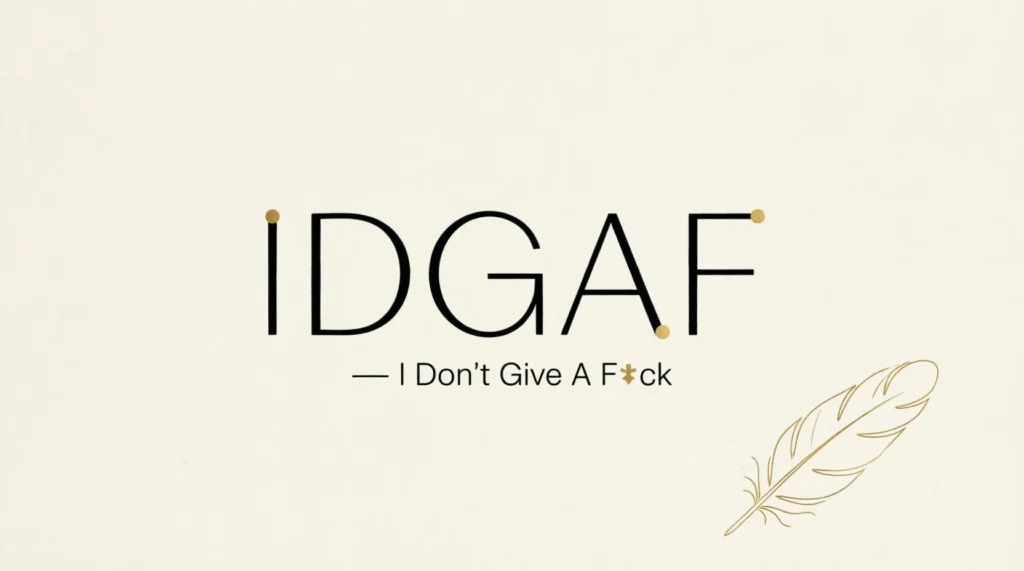
IDGAF stands for: _“I Don’t Give A F*.”_**
It’s a strong, informal expression used to show that you don’t care at all about something or someone’s opinion.
👉 It’s often used to express:
- Indifference
- Frustration
- Confidence
- Rebellion
💡 Featured Snippet Definition:
IDGAF means “I don’t give a f*.” It’s a slang term used to show strong indifference or lack of concern about something, often with a bold or emotional tone.**
💬 Simple Meaning (In Easy Words)
Let’s make it super clear:
👉 IDGAF = “I really don’t care.”
But not in a polite way.
It’s more like:
- “I don’t care at all.”
- “This doesn’t matter to me.”
- “Your opinion doesn’t affect me.”
⚠️ The key difference?
It’s intense and emotionally charged.
🌍 Where Is “IDGAF” Used?

You’ll mostly see IDGAF online, but it’s spreading into everyday speech too.
📱 Common platforms:
- Text messages & chats
- Social media (Instagram, TikTok, Twitter/X)
- Memes & captions
- Online gaming chats
🧍 Real-life situations:
- Talking to close friends
- Venting frustration
- Showing confidence or independence
🚫 Not appropriate for:
- Work emails
- Professional settings
- Formal conversations
🤔 Why Do People Use “IDGAF”?
People don’t just use this phrase randomly — there’s usually a feeling behind it.
🔥 Main reasons:
- To show confidence “IDGAF what people think about my style.”
- To express frustration “At this point, IDGAF anymore.”
- To act tough or unbothered “Say whatever you want, IDGAF.”
- To set boundaries “If they don’t respect me, IDGAF about them.”
💡 It’s often about taking control of your emotions or showing you’re not affected.
🧾 Real-Life Examples (With Explanation)
Let’s break down how it’s actually used 👇
✅ Example 1:
“People are talking behind my back, but IDGAF.”
👉 Meaning: You’re choosing not to care about gossip.
✅ Example 2:
“Wear whatever you want. IDGAF about trends.”
👉 Meaning: You’re confident and don’t follow others.
✅ Example 3:
“He didn’t reply? IDGAF.”
👉 Meaning: You’re pretending (or trying) not to care.
⚠️ Example 4 (Rude tone):
“IDGAF about your opinion.”
👉 Meaning: This can sound disrespectful or dismissive.
⚖️ IDGAF vs Similar Terms
Here’s how IDGAF compares to other common phrases:
| Phrase | Meaning | Tone | Intensity |
|---|---|---|---|
| IDGAF | I don’t care at all | Aggressive / bold | 🔥🔥🔥 High |
| IDC | I don’t care | Neutral | 🔥 Low |
| Whatever | Indifference | Casual / dismissive | 🔥🔥 Medium |
| No worries | It’s fine | Friendly | 😊 Very low |
💡 Key takeaway:
IDGAF is the strongest and most emotionally charged version.
🧭 When Should You Use “IDGAF”?
This is important — because context matters a LOT.
✅ Safe to use:
- With close friends
- In jokes or memes
- When expressing personal confidence
- Casual online conversations
⚠️ Be careful:
- Talking to someone sensitive
- In arguments (can escalate conflict)
- Public posts (can seem arrogant)
❌ Avoid completely:
- Workplace
- School assignments
- Professional communication
❗ Common Misunderstandings
Many people misuse IDGAF without realizing it.
🚫 Mistake 1: Thinking it’s harmless
It’s not neutral — it can sound aggressive.
🚫 Mistake 2: Using it in formal situations
This can damage your image instantly.
🚫 Mistake 3: Overusing it
If you say IDGAF all the time, it may:
- Make you seem rude
- Push people away
- Reduce its impact
💡 Pro Tips for Using “IDGAF” Like a Pro
Want to sound confident—not careless? Here’s how:
✅ Use it with intention
Only when you truly mean it.
🎯 Match the tone
Ask yourself:
“Will this sound confident… or disrespectful?”
⚖️ Balance it
Instead of:
“IDGAF what you think”
Try:
“I respect your opinion, but I’m doing what feels right for me.”
🔥 Use it for empowerment, not negativity
Best use:
Standing up for yourself
Not:
Putting others down
❓ FAQ:
1. Is “IDGAF” rude?
👉 Yes, it can be. It depends on the context and tone. It often sounds blunt or aggressive.
2. Can I use IDGAF in professional settings?
❌ No. It’s too informal and contains profanity.
3. Is IDGAF the same as IDC?
👉 Not exactly. IDC is softer, while IDGAF is much stronger and more emotional.
4. Why do people use IDGAF online?
👉 To express confidence, frustration, or that they don’t care about opinions or situations.
🧠 Final Thoughts:
IDGAF is powerful.
It’s not just slang it’s an attitude.
Used the right way, it shows:
- Confidence
- Independence
- Emotional strength
Used the wrong way, it can make you sound:
- Rude
- Dismissive
- Unapproachable
👉 So next time you type IDGAF pause for a second.
Do you really mean it? 😉

Hi, I’m the writer behind WordlyMeaning, a place where confusing words, slang, phrases, and everyday expressions become easy to understand.
I enjoy exploring the little details behind the words people use every day—from internet slang and texting shortcuts to unusual phrases and modern expressions. My goal is simple: to explain things clearly, naturally, and without unnecessary complexity.
Through WordlyMeaning, I share helpful and easy-to-read explanations for curious readers who want to know not just what a word means, but also how and when people actually use it.
When I’m not writing, I’m usually discovering new words, researching language trends, or looking for interesting ways to make everyday communication easier.
Welcome to WordlyMeaning—where every word has a story and every meaning is worth discovering.